
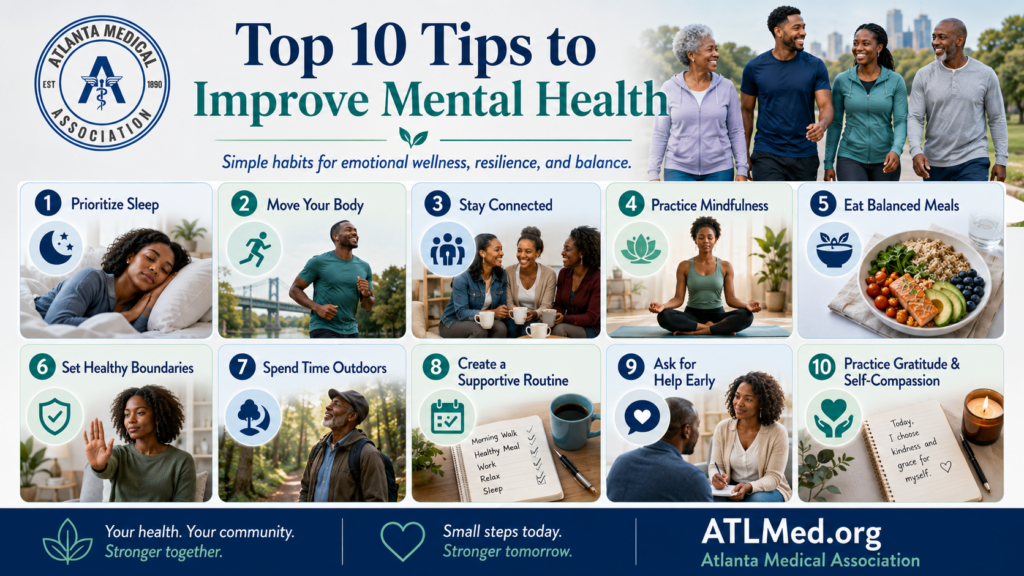
Practical Steps for Building Emotional Wellness, Resilience, and Balance
Mental health is an essential part of overall health. It influences how we think, feel, make decisions, manage stress, build relationships, and engage with the world around us. The CDC defines mental health as including emotional, psychological, and social well-being, and notes that it is closely connected to physical health.
Improving mental health does not always require major life changes. Often, small daily habits can make a meaningful difference over time. The following ten tips are practical, evidence-informed strategies that can help support emotional wellness, reduce stress, and strengthen resilience.
1. Prioritize Quality Sleep
Sleep is one of the foundations of mental health. Poor sleep can affect mood, concentration, patience, decision-making, and stress tolerance. A consistent sleep routine helps the body and brain recover from the demands of the day.
Try setting a regular bedtime, limiting late-night screen time, reducing caffeine later in the day, and creating a calming wind-down routine. The National Institute of Mental Health recommends sticking to a sleep routine and getting enough sleep as part of managing stress and caring for mental health.
Good sleep is not a luxury. It is maintenance for the mind.
2. Move Your Body Regularly
Physical activity is one of the most powerful tools for supporting mental health. Exercise can help improve mood, reduce stress, support better sleep, and increase energy. The CDC notes that regular physical activity is one of the most important things people can do for their health and can improve mental health.
You do not need an intense fitness plan to benefit. Walking, stretching, dancing, gardening, swimming, cycling, or light strength training can all support emotional well-being. The best form of movement is the one you can do consistently.
Start small: a 10-minute walk, a few minutes of stretching, or taking the stairs can build momentum.
3. Stay Connected With Others
Human connection is deeply tied to mental health. Supportive relationships can reduce loneliness, improve emotional resilience, and help people cope with difficult moments. The CDC states that healthy relationships offer belonging, connection, and support, which can improve emotional well-being.
Social connection does not have to mean having a large circle of friends. It can be a phone call, a text message, a coffee meeting, a faith community, a professional network, a neighborhood group, or a support group.
The World Health Organization has also emphasized the importance of social connection for both mental and physical health, launching global efforts to raise awareness around loneliness and social isolation.
A simple first step: reach out to one person this week just to check in.
4. Practice Mindfulness and Stress Reduction
Stress is a normal part of life, but chronic stress can take a toll on mental and physical health. Mindfulness, deep breathing, prayer, meditation, journaling, and relaxation exercises can help calm the nervous system and create space between a stressful moment and your response.
NIMH recommends relaxation exercises such as deep breathing, visualization, mindfulness practices, and journaling when people begin to feel overwhelmed.
Try this simple reset: inhale slowly for four counts, hold for two counts, and exhale for six counts. Repeat for one to two minutes. This can help slow the body’s stress response and bring attention back to the present moment.
5. Eat Regular, Balanced Meals
Nutrition and mental health are closely connected. Skipping meals, relying heavily on sugar or caffeine, or eating inconsistently can affect energy, irritability, and concentration. While food is not a cure-all, regular meals can help stabilize mood and support brain function.
NIMH recommends eating healthy, regular meals as part of a self-care routine for managing stress and supporting mental health.
A helpful approach is to focus on consistency rather than perfection. Aim for meals that include protein, fruits or vegetables, whole grains, and water. Small changes, such as adding breakfast, preparing healthy snacks, or reducing excessive caffeine, can support emotional balance.
6. Limit Negative Inputs and Set Healthy Boundaries
What we consume emotionally matters. Constant exposure to stressful news, toxic social media, unhealthy relationships, or unrealistic expectations can contribute to anxiety, comparison, and burnout.
Improving mental health may require setting boundaries around time, people, technology, and responsibilities. This could mean turning off notifications, limiting doom-scrolling, saying no to unnecessary commitments, or creating quiet time during the day.
Boundaries are not selfish. They are a form of self-respect and emotional protection.
Ask yourself: “What is draining me that I can reduce, pause, or manage differently?”
7. Spend Time Outdoors
Time outside can support mental clarity, relaxation, and emotional reset. Natural light, fresh air, and movement can help break cycles of stress and rumination.
Even short outdoor breaks can be helpful. Sit on a porch, walk around the block, visit a park, or take a lunch break outside. If getting outdoors is difficult, opening blinds, sitting near sunlight, or adding plants to your environment may offer a small mood boost.
Pairing outdoor time with movement — such as walking — can provide both physical and emotional benefits.
8. Create a Routine That Supports You
Routines can provide structure, stability, and predictability, especially during stressful seasons. A supportive routine does not need to be rigid. It should help you care for yourself more consistently.
Consider building daily anchors, such as a morning check-in, regular meals, movement, focused work time, rest breaks, and a bedtime routine. The NIH Emotional Wellness Toolkit highlights evidence-based strategies for emotional well-being, including managing stress and building healthy habits.
A routine can also help reduce decision fatigue. When healthy habits become part of the rhythm of the day, they require less effort to maintain.
9. Ask for Help Early
One of the strongest mental health habits is knowing when to ask for support. Talking to a trusted friend, family member, faith leader, physician, counselor, or therapist can help you process challenges before they become overwhelming.
Self-care is important, but it is not a substitute for professional care when symptoms are persistent, intense, or interfering with daily life. NIMH notes that self-care can support treatment and recovery for people living with mental illness, but people should seek qualified care for diagnosis, treatment, and personal guidance.
Consider reaching out for professional support if you experience ongoing sadness, anxiety, irritability, hopelessness, sleep disruption, loss of interest, panic, substance misuse, or thoughts of self-harm.
In the United States, anyone in suicidal crisis or emotional distress can call or text 988 to reach the Suicide & Crisis Lifeline.
10. Practice Gratitude, Purpose, and Self-Compassion
Mental health improves when we make space for meaning, appreciation, and kindness toward ourselves. Gratitude does not ignore hardship. It helps the brain notice what is still present, supportive, or hopeful.
Purpose can come from work, family, faith, service, creativity, mentorship, learning, or community involvement. Self-compassion means treating yourself with the same patience and care you would offer someone you love.
Try writing down three things each day: one thing you are grateful for, one thing you handled well, and one thing you can release. Over time, this practice can help shift attention away from constant self-criticism and toward emotional resilience.
When to Seek Professional Support
Every person experiences stress, sadness, or anxiety from time to time. But professional help may be needed when emotional distress lasts for weeks, disrupts daily responsibilities, affects relationships, or leads to harmful coping behaviors.
Mental health support can include therapy, medication, support groups, lifestyle changes, crisis care, or a combination of approaches. The right care plan depends on the person, their symptoms, their history, and their goals.
Seeking help is not a sign of weakness. It is a sign that your health matters.
Conclusion: Small Steps Can Create Meaningful Change
Improving mental health is not about achieving a perfect life. It is about building habits, relationships, and support systems that help you live with more balance, resilience, and hope.
Start with one step. Get more sleep. Take a short walk. Call a friend. Drink water. Write down what you are feeling. Ask for help. Protect your peace.
Mental health is health — and caring for it is one of the most important investments you can make in yourself, your family, and your community.
